
The 5 Audio Specs That Separate Professional from Amateur Podcasts
Your listeners can't articulate why your podcast sounds "off," but their subconscious knows in eight seconds.
They won't say "the noise floor is too high" or "the LUFS integration is inconsistent." They'll just click away. Their brain processes audio quality faster than conscious thought, making a snap judgment about credibility before your first sentence finishes.
Professional audio isn't about expensive equipment. It's about meeting specific technical standards that signal competence to your listener's subconscious. Miss these standards and your content won't matter because nobody will stay long enough to hear it.
Here are the five audio specifications that set podcasts people trust apart from those people skip.
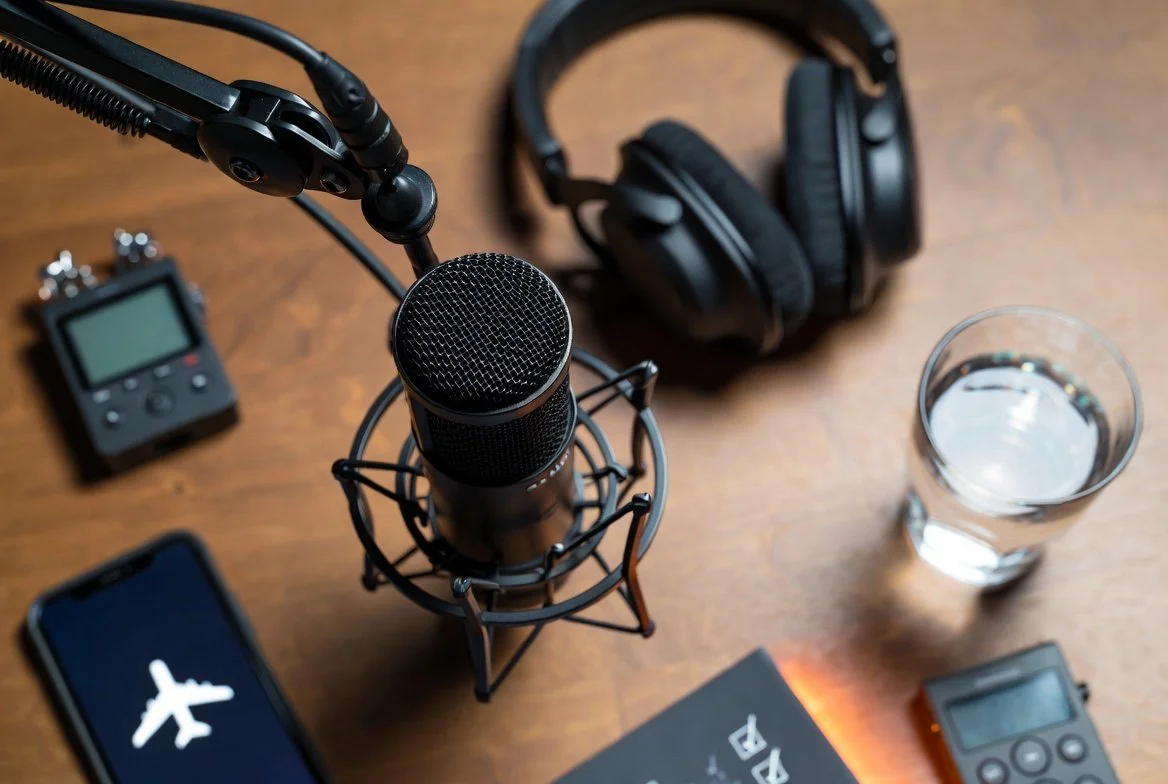
1. The -12dB to -6dB Recording Range
What it means: Your voice should peak between -12 and -6 decibels on your recording meter. This is the range where your voice is loud enough to be clear but quiet enough to avoid distortion.
Why it matters: Recording too quietly creates listener volume fatigue. They have to turn their volume all the way up, which amplifies background noise and makes your podcast exhausting to listen to. Recording too loud creates digital distortion—those harsh, crackly artefacts that make professional audio engineers wince.
How to check: Watch your recording meter while speaking at your normal volume. The peaks—the loudest parts of your speech—should consistently hit between -12dB and -6dB. Adjust your distance from the microphone until you're in this range, then don't move.
The amateur tell: Recording "hot" (above -3dB) because it feels safer to have loud audio. This is the audio equivalent of shouting into someone's face. It doesn't make you clearer—it makes you distorted and unpleasant.
PSG standard: We set your levels before you speak a word. We test your natural speaking volume, position the microphone correctly, and monitor throughout the recording. You never enter distortion territory because we're watching the meters so you can focus on content.
2. The 48kHz/24-bit Minimum
What it means: The sample rate (48kHz) determines how many times per second your audio is captured. Bit depth (24-bit) determines the dynamic range between the quietest and loudest sounds. Think of it like photo resolution—higher numbers capture more detail.
Why it matters: 48kHz/24-bit is broadcast quality. It's what professional studios use for film, television, and streaming platforms. Recording at this level future-proofs your content and gives you flexibility in post-production. You can always reduce quality later if needed, but you can never add quality that wasn't captured in the recording.
The amateur mistake: Recording at 44.1kHz/16-bit (CD quality) because "it's good enough for music, so it's good enough for podcasts." This logic ignores that you might want to pitch-shift a voice, remove background noise, or repurpose your audio for video. A lower-quality recording gives you less room to edit without introducing artefacts.
Reality check: You can always downconvert high-quality audio to smaller file sizes for distribution. You cannot upconvert low-quality audio to broadcast standards. Capture it right the first time.
PSG standard: We record everything at 48kHz/24-bit as uncompressed WAV files. You receive broadcast-ready files that work for any platform—podcasts, YouTube, corporate presentations, or future projects you haven't thought of yet.
3. The -16 LUFS Loudness Target
What it means: LUFS (Loudness Units relative to Full Scale) measures the integrated loudness of your entire episode, not just the peak volume. It's a perceptual measurement—how loud your podcast actually feels to a human listener over time.
Why it matters: Spotify normalises to -14 LUFS. Apple Podcasts normalises to -16 LUFS. YouTube normalises to -14 LUFS. If your podcast is mastered at -10 LUFS, these platforms will reject it. If you're mastered to -20 LUFS, listeners will complain that you're too quiet even when they max out their volume.
The problem: "I turned my volume all the way up, and it's still quiet compared to other podcasts." This happens when the integrated loudness is too low, even if the peaks are hitting the right levels. Peak volume and perceived loudness are different measurements.
The solution: Proper mastering to -16 LUFS with -1dB true peak. This ensures consistent loudness throughout your episode and matches the target level for major podcast platforms. Your listeners can switch between your podcast and others without adjusting their volume.
PSG standard: We deliver broadcast-ready masters at -16 LUFS. No guesswork. No "sounds about right" approach. Measured, mastered, and matched to platform standards.
4. The Room Tone Baseline (>-45dB Noise Floor)
What it means: The silence between your words should be measured quieter than -45dB. This is your noise floor—the constant background sound in your recording space. It includes HVAC hum, computer fan noise, electrical buzz, and environmental sounds.
Why it matters: Poor room tone sounds cheap. Your listener doesn't consciously notice the hum, but their brain registers it as unprofessional. It's the audio equivalent of filming a video with a cluttered, messy background—the content might be great, but the presentation undermines credibility.
Common culprits: HVAC systems cycling on and off. Computer fans are ramping up during processing. Refrigerator compressors are in the next room. Traffic noise is bleeding through the windows. Electrical hum from poorly grounded equipment.
The test: Record 10 seconds of complete silence in your recording space. Don't speak, don't move. Then import it into your editing software and amplify it by 20dB. What do you hear? If you hear a constant hum, buzz, or hiss, your noise floor is too high.
PSG advantage: Professional acoustic treatment, isolated HVAC systems, and no external noise. Our noise floor consistently measures below -50dB because the infrastructure was built specifically for audio recording. You can't achieve this in a home office without significant investment.
5. The Intelligibility Standard (Clear Voice Above -30dB)
What it means: Your voice fundamentals—the core frequencies that carry speech—should be at least 15dB louder than your room tone. This creates a clear separation between your voice and background noise, making every word easy to understand.
Why it matters: Intelligibility equals listener retention. If people have to concentrate to understand your words, they'll leave. Audio should feel effortless. The moment comprehension requires work, you've lost your audience.
The problem: Reverb and echo from untreated rooms. Muddy low-end from improper microphone positioning. Background noise is competing with voice frequencies. These issues make your words technically audible but perceptually exhausting.
The fix: Close-mic technique (one fist distance from the microphone), acoustic treatment to control reflections, and proper EQ to emphasise voice clarity while reducing competing frequencies.
PSG approach: We use close-mic technique, real-time dynamic range management, and acoustic treatment designed specifically for voice recording. Your voice sits cleanly above the noise floor with zero effort on your part.
The Compound Effect
Here's what most podcasters miss: each specification violation isn't catastrophic on its own.
Recording at -15dB instead of -10dB? Barely noticeable.
A noise floor at -40dB instead of -50dB? Most people won't hear it.
Missing the -16 LUFS target by 2dB? Not the end of the world.
But compound them.
Record too quiet, in an echoey room, with traffic noise bleeding through, exported at low bitrate, mastered to the wrong loudness standard—and you've created audio that screams "amateur" even if your content is brilliant.
Professional audio isn't about perfection in any single specification. It's about meeting every baseline standard so your listener's subconscious never questions your credibility.
When all five specifications align, the audio becomes invisible. Your listener focuses entirely on your message because the sound quality doesn't distract them.
That's the goal. Invisible audio that lets your content breathe.
The Home Studio Reality Check
Can you meet these standards while recording at home?
Maybe. If you're willing to invest time and money.
You'll need:
A properly treated room: £300-£800 for acoustic panels, bass traps, and diffusion
Quality interface and microphone: £400-£1,200 for equipment that actually meets broadcast standards
Acoustic treatment knowledge: £200-£600 for additional soundproofing if your space has external noise issues
Technical knowledge: 50+ hours learning signal flow, gain staging, EQ, compression, and mastering
Add it up. You're looking at £900-£2,600 in equipment and weeks of learning before you record a single usable episode.
Or you can record at Podcast Studio Glasgow for £75 per hour and meet every standard automatically.
Four episodes recorded in one session: £300.
Four episodes that meet broadcast standards from day one: priceless.
The math makes sense after your 15th episode. Before that, you're paying for education. After that, you're paying for convenience and guaranteed quality.
Your content deserves audio that doesn't sabotage it.
Professional audio specifications aren't about being a perfectionist. They're about removing the obstacles between your message and your listener's attention.
Book your first session at Podcast Studio Glasgow. We'll deliver broadcast-ready audio that meets every specification on this list, automatically.
£75/hour, no hidden costs.