What Mic Does Joe Rogan Use? (And Why We Use Rode Procasters at The Podcast Studio Glasgow)
If you've Googled "best podcast microphone," you've seen the Shure SM7B everywhere. It's on Joe Rogan's desk, it's in YouTube studios, it's on the shopping list of every aspiring podcaster who thinks buying the same gear means sounding the same. But here's the uncomfortable truth.
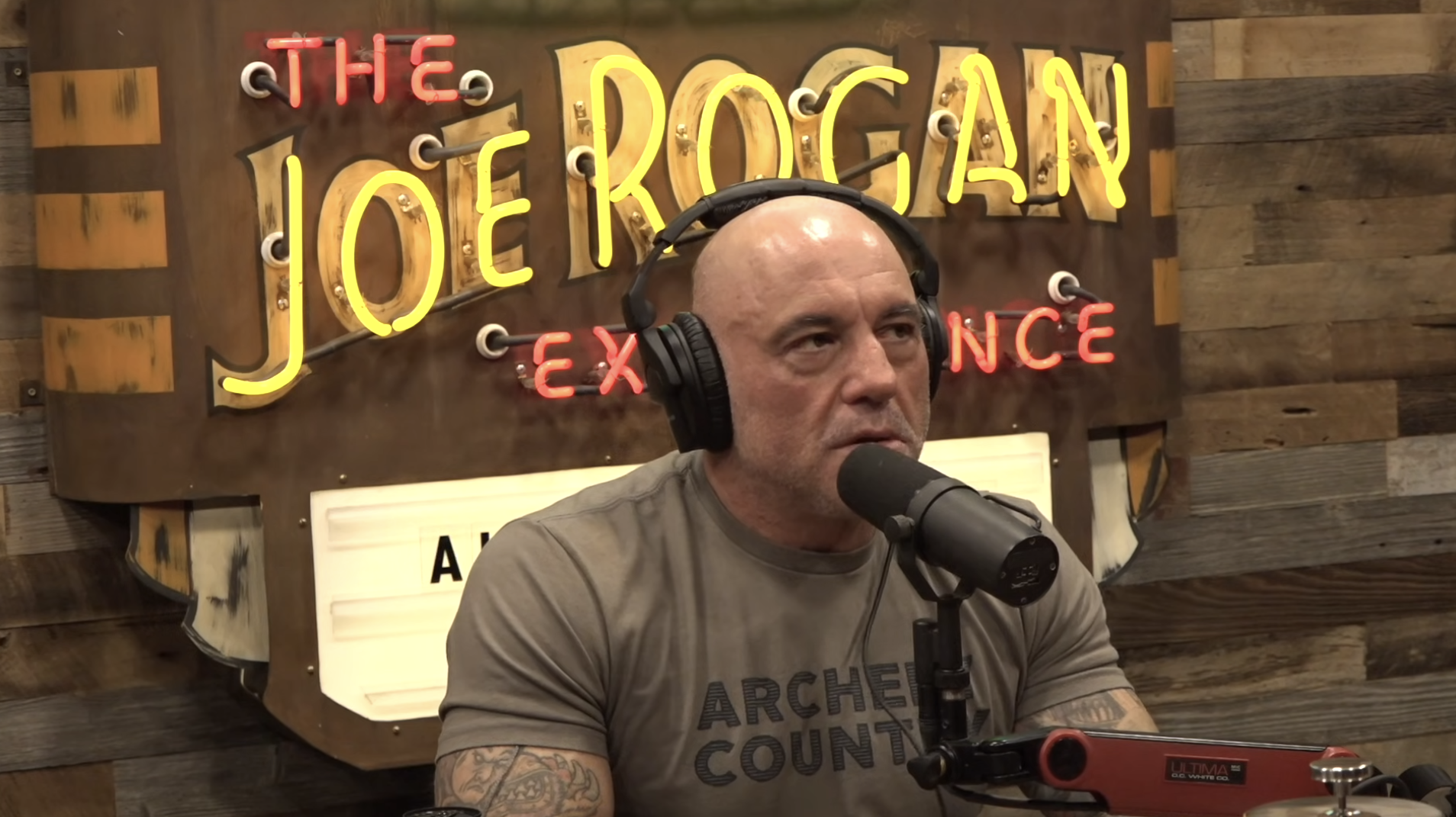
Joe Rogan uses the Shure SM7B Vocal Dynamic Microphone. So do thousands of other podcasters, broadcasters, radio hosts, and YouTubers. It's become the default answer to "what microphone should I buy for podcasting?" — which is both helpful and misleading.
Helpful because the SM7B is genuinely excellent. Misleading because the microphone Joe Rogan uses isn't what makes his podcast sound professional. The studio environment, the audio engineering, the RODECaster Pro mixer handling levels, the decades of broadcasting experience — that's what makes the Joe Rogan Experience sound the way it does.
If you're starting a podcast and wondering whether to buy a Shure SM7B, this post explains what the mic actually does, why it's popular, the trade-offs, and whether you'd be better served by something else that costs half as much.
Why Joe Rogan Uses the Shure SM7B
The SM7B isn't a random gear Joe Rogan picked because it looked cool. It's a broadcast-standard dynamic microphone designed specifically for spoken-word applications — radio, podcasts, voice-over work, and studio vocals. Here's what it does well:
1. It Rejects Background Noise
Dynamic microphones (such as the SM7B) use a moving-coil design, which makes them less sensitive than condenser microphones. Translation: they pick up the voice directly in front of them and reject most of what's happening around the room. In Joe Rogan's studio — with cameras running, computers humming, air conditioning blowing — that matters.
The SM7B's cardioid polar pattern focuses on sound from the front while rejecting noise from the sides and rear. If you're recording in an untreated room (most home studios), this is the single most important feature a microphone can have.
2. It Handles Close-Proximity Recording
Watch any Joe Rogan episode, and you'll notice the microphone is inches from his mouth. That's intentional. The SM7B is designed for close-talk applications — you speak directly into it, 2-4 inches away. This proximity creates the warm, radio-quality bass response podcasters associate with "professional" sound.
The built-in pop filter and internal shock mount eliminate plosives (the "p" and "b" sounds that distort audio) and mechanical vibrations without needing external accessories. You can move the microphone, adjust the boom arm, and lean back in your chair; the SM7B isolates your voice from handling noise.
3. It Shields Against Electromagnetic Interference
Joe Rogan's studio is full of electronic equipment: multiple cameras, computer monitors, lighting rigs, and switchers. All of that generates an electromagnetic hum that cheaper microphones pick up as a 50Hz/60Hz buzz in the audio. The SM7B features advanced shielding designed to reject interference from computer monitors and other electrical devices.
If you're recording in a room with multiple screens, this feature alone justifies the cost.
4. It Sounds Smooth and Broadcast-Ready
The SM7B has a flat, wide-range frequency response (50Hz-20kHz) that captures natural, warm vocals without the harsh brightness of cheaper mics. It has switchable bass roll-off and presence boost controls on the back, allowing you to tailor the sound to different voices and recording environments.
Deep voice? Leave the settings flat. Thin voice that needs more body? Engage the presence boost. Recording in a room with too much low-end rumble? Roll off the bass. It's versatile.
The Shure SM7B's Famous Résumé
The SM7B isn't just a podcast mic. It has serious audio credibility:
Michael Jackson recorded "Thriller" vocals on the SM7 (the predecessor to the SM7B)
Used by radio stations worldwide for broadcast work
Standard in voice-over studios for ADR (automated dialogue replacement) in film/TV
Seen in countless podcast studios — not just Joe Rogan, but Tim Ferriss, Lex Fridman, and hundreds of others
That legacy creates a halo effect. When beginners see the SM7B on professional podcasts, they assume it's the reason those podcasts sound professional. But here's what they're missing:
Joe Rogan's SM7B runs through:
A mixer (managing levels, compression, EQ)
An audio interface (converting analogue to digital)
Professional preamps (providing 60+ dB of clean gain)
Treated studio acoustics (reducing room echo and reflections)
Experienced producers (Young Jamie handles real-time audio monitoring)
The microphone is one piece in a professional audio chain. It's not magic.
The Problem: It's Expensive and Demanding
Here's where beginners run into trouble.
UK Pricing (February 2026):
Shure SM7B: £327-£490 depending on retailer
Typical budget microphone (USB condenser): £50-100
Professional alternative (Rode Procaster): £180-230
The SM7B costs 3-5x more than starter options and 1.5-2x more than comparable dynamic mics.
It Requires Serious Gain
The SM7B has very low output sensitivity (-59 dB). Translation: it needs a LOT of gain (amplification) to reach usable recording levels. If you plug it into a basic audio interface, the signal will be weak, quiet, and noisy.
What you need to power it properly:
Audio interface with 60+ dB of clean gain (Focusrite Scarlett 2i2, Universal Audio Apollo)
OR an external preamp like the Cloudlifter CL-1 (adds £120-150 to the total cost)
OR the newer Shure SM7dB (built-in preamp, costs £100+ more than the SM7B)
Joe Rogan's studio uses high-end preamps. You probably don't have those. If you buy an SM7B and plug it into a cheap interface, it'll sound thin and require maxed-out gain that introduces noise. This is the most common mistake beginners make.
Sources: JRE Library Equipment Guide, Acoustic Nature Joe Rogan Mic Guide
The Alternative: Why We Use Rode Procaster at Podcast Studio Glasgow
At Podcast Studio Glasgow, we don't use the Shure SM7B. We use Rode Procaster dynamic microphones. Here's why:
Rode Procaster: £180-230 (About Half the Cost of SM7B)
The Procaster is also a broadcast-quality dynamic microphone designed for podcasting, radio, and voice-over. It shares the SM7B's core advantages:
Dynamic design (rejects background noise)
Cardioid polar pattern (focuses on the speaker)
Internal pop filter (eliminates plosives)
Internal shock mount (reduces handling noise)
Tailored frequency response (75Hz-18kHz, optimised for speech)
Why the Procaster Works for Most Podcasters:
Half the cost — you can spend the savings on better headphones, a boom arm, or acoustic treatment
Clearer out of the box — the Procaster's frequency response emphasises speech intelligibility without requiring EQ adjustments
Easier to drive — while it still needs decent gain, it's slightly more forgiving than the SM7B with mid-tier interfaces
Built like a tank — all-metal housing, Australian-designed for durability
The Procaster doesn't have the SM7B's legacy or Instagram recognition, but it delivers broadcast-quality audio at a more accessible price point. For most podcasters — especially those recording in untreated home environments — the Procaster is the smarter choice.
Sources: Rode Procaster vs SM7B Comparison, Wired Clip Mic Showdown
| Feature | Shure SM7B | Rode Procaster |
|---|---|---|
| Price (UK) | £327–490 | £180–230 |
| Frequency Response | 50Hz–20kHz (wider) | 75Hz–18kHz (speech-focused) |
| Sensitivity | -59 dB (very low) | -56 dB (slightly higher) |
| Preamp Requirement | Essential (60+ dB gain) | High gain needed, but slightly easier to drive |
| Sound Character | Warm, smooth, broadcast | Clear, detailed, radio-ready |
| Adjustability | Bass roll-off & presence boost switches | Fixed response (EQ in post) |
What Actually Matters More Than Your Microphone
If you're starting a podcast and obsessing over microphone choice, you're focusing on the wrong thing. Here's what actually makes podcasts sound professional:
1. Recording Environment
A £500 microphone in an echoey room sounds worse than a £100 microphone in a treated space. Room acoustics matter more than gear.
Quick fixes:
Record in a smaller room (less echo)
Add soft furnishings (curtains, rugs, cushions absorb sound)
Use acoustic panels or foam (£30-100 for basic treatment)
Avoid recording near hard surfaces (windows, bare walls)
2. Microphone Technique
Joe Rogan constantly reminds guests: "Pull that mic close to your mouth." That's not microphone snobbery; it's physics.
Dynamic mics like the SM7B and Procaster are designed for close-proximity recording (2-4 inches). The closer you are, the warmer and fuller your voice sounds (proximity effect). Too far away? Thin, weak, amateurish audio.
3. Gain Staging
Proper gain levels prevent distortion (too loud) and noise (too quiet). Most beginners set the gain too low, then crank up the volume in post, which amplifies background hiss.
Rule of thumb: Your audio peaks should hit around -12 dB to -6 dB during recording. Not -24 dB (too quiet), not 0 dB (distorted).
4. Post-Production
Even Joe Rogan's podcast gets edited. Removing silence, adjusting levels, adding compression, cutting filler words — this polish makes amateur recordings sound professional.
If you don't know how to edit audio, either learn (free software like Audacity or Reaper) or hire an editor. Spending £400 on a microphone but skipping post-production is backwards.
Should You Buy the Shure SM7B?
Buy the SM7B if:
You have a proper audio interface with 60+ dB of clean gain (or budget for a Cloudlifter)
You're recording in a room with electronic equipment (computer monitors, cameras)
You want versatility (recording vocals, instruments, voice-over, beyond podcasting)
You value the legacy and resale value (SM7Bs hold their price)
Budget isn't a constraint
Don't buy the SM7B if:
You're using a basic USB interface or budget mixer
You're recording in a quiet, treated environment where background rejection is less critical
You want plug-and-play simplicity
£300+ feels steep when alternatives cost £180
Consider the Rode Procaster if:
You want broadcast-quality audio at half the cost
You're focused purely on podcasting/voice work (not music production)
You have a mid-tier interface (Focusrite Scarlett, PreSonus AudioBox)
You prioritise clarity and speech intelligibility over adjustability
Consider other options entirely if:
You're recording solo in a quiet room: Shure MV7 (USB/XLR hybrid, £230)
You need a complete beginner setup: Audio-Technica ATR2100x-USB (USB/XLR, £90)
You're doing video podcasts and want minimal desk footprint: Røde PodMic (compact dynamic, £99)
The Podcast Studio Glasgow Setup: Rode Procaster + RODECaster Pro
At Podcast Studio Glasgow, our audio chain looks like this:
Microphones: Up to 4x Rode Procaster dynamic mics
Mixer: RODECaster Pro (handles routing, compression, EQ, multi-track recording)
Recording: Separate tracks per speaker (essential for post-production flexibility)
Monitoring: Closed-back headphones (Sony MDR-7506, Audio-Technica ATH-M50x)
Acoustics: Treated room (bass traps, panels, diffusers)
This setup produces broadcast-quality audio without the SM7B's price tag or gain requirements. Clients' recordings at the Podcast Studio Glasgow sound professional because the entire signal chain is optimised, not just the microphone.
Studio time: £75/hour ad hoc, or Production Partner Programme (£1,500 for 6 monthly sessions = £250/month effective rate for regular recording).
Final Takeaway: Dynamic Mics Matter, Brand Names Don't
Joe Rogan uses the Shure SM7B. So do thousands of other podcasters. It's an exceptional microphone — but it's not essential.
What IS essential:
Using a dynamic microphone (not a condenser) for podcasting
Recording close to the mic (2-4 inches)
Having proper gain (don't use cheap preamps with low-output mics)
Treating your recording environment (even basic acoustic improvements make a massive difference)
Learning post-production (or hiring someone who knows it)
The Rode Procaster delivers 90% of the SM7B's performance at 50% of the cost. For most podcasters, that's the smarter investment. Spend the savings on better headphones, acoustic treatment, or studio time where professionals handle the entire signal chain.
Joe Rogan's podcast sounds professional because of his studio, his team, and his decades of experience. The microphone is just one piece of the puzzle. Don't let gear obsession distract you from what actually matters — recording consistently, improving your content, and building an audience.
Sources:
JRE Library, "Joe Rogan Experience Podcast Equipment & Studio Setup" (https://jrelibrary.com/articles/joe-rogan-experience-podcast-equipment-studio-setup/)
Acoustic Nature, "What Microphone Does Joe Rogan Use?" (https://acousticnature.com/journal/what-microphone-does-joe-rogan-use)
Soundorp, "Joe Rogan Podcast Setup and Equipment List" (https://soundorp.com/joe-rogan-podcast-setup-and-equipment-list/)
Kettner Creative, "Rode Procaster Vs Shure SM7B: Best Studio Mic Showdown" (https://kettnercreative.com/microphone/procaster-vs-sm7b/)
Wired Clip, "Rode Procaster vs SM7B: In-Depth Microphone Showdown & Comparison" (https://wiredclip.com/rode-procaster-vs-sm7b/)
PriceSpy UK, "Shure SM7B" pricing data (https://pricespy.co.uk/product.php?p=132079)