How I Got Started in the World of Podcasting
I was listening to episode 2 of the fantastic Pop Culture Patter Podcast, where the host, Callum, spoke with true clarity and honesty about the journey that led him to start his podcast.
It got me thinking back to 2005. The year I fired up Audacity, leaned into a cheap PC World mic, and said something into it. To this day, I cannot remember what.
That was March 2005. The tartanpodcast, the first music podcast from Scotland, was live.
To put that in context: podcasting barely existed yet. The word itself was only coined in February 2004, when British journalist Ben Hammersley suggested it in The Guardian as a name for this strange new medium. The first UK podcast anyone can reliably trace is The Hitchin' Hours, which debuted in October 2004. I was recording within six months of that. According to James Cridland's authoritative history of UK podcasting on Podnews, the BBC covered the tartanpodcast in June 2005, just a few months after I started it. That kind of pick-up in the early days was remarkable. Podnews
Not long after, Clark Boyd came calling. Boyd hosted a technology segment on The World, a programme distributed across America on NPR. He wanted to talk to me about what I was doing up here in Glasgow with a microphone and a broadband connection. That interview led to a spot on BBC Radio Scotland. I was twenty-odd episodes into a podcast and suddenly had to explain the medium to a national radio audience who had never heard of it.
It was a genuinely wild time.
You’ll hear snippets from an interview I did on BBC Radio Scotland, off the back of an interview conducted by Clark Boyd for the World, a technology-based radio show that aired across America on NPR. This all took place in the summer of 2005.
It was a crazy time. It felt like the dawn of something exciting.
Back then, the idea of a professional podcast studio was an absolute pipedream.
The production standards for podcasters back then were pretty low. In fact, those lo-fi production sounds were part of what made podcasting accessible and quaint for some.
Times have changed, and expectations have grown.
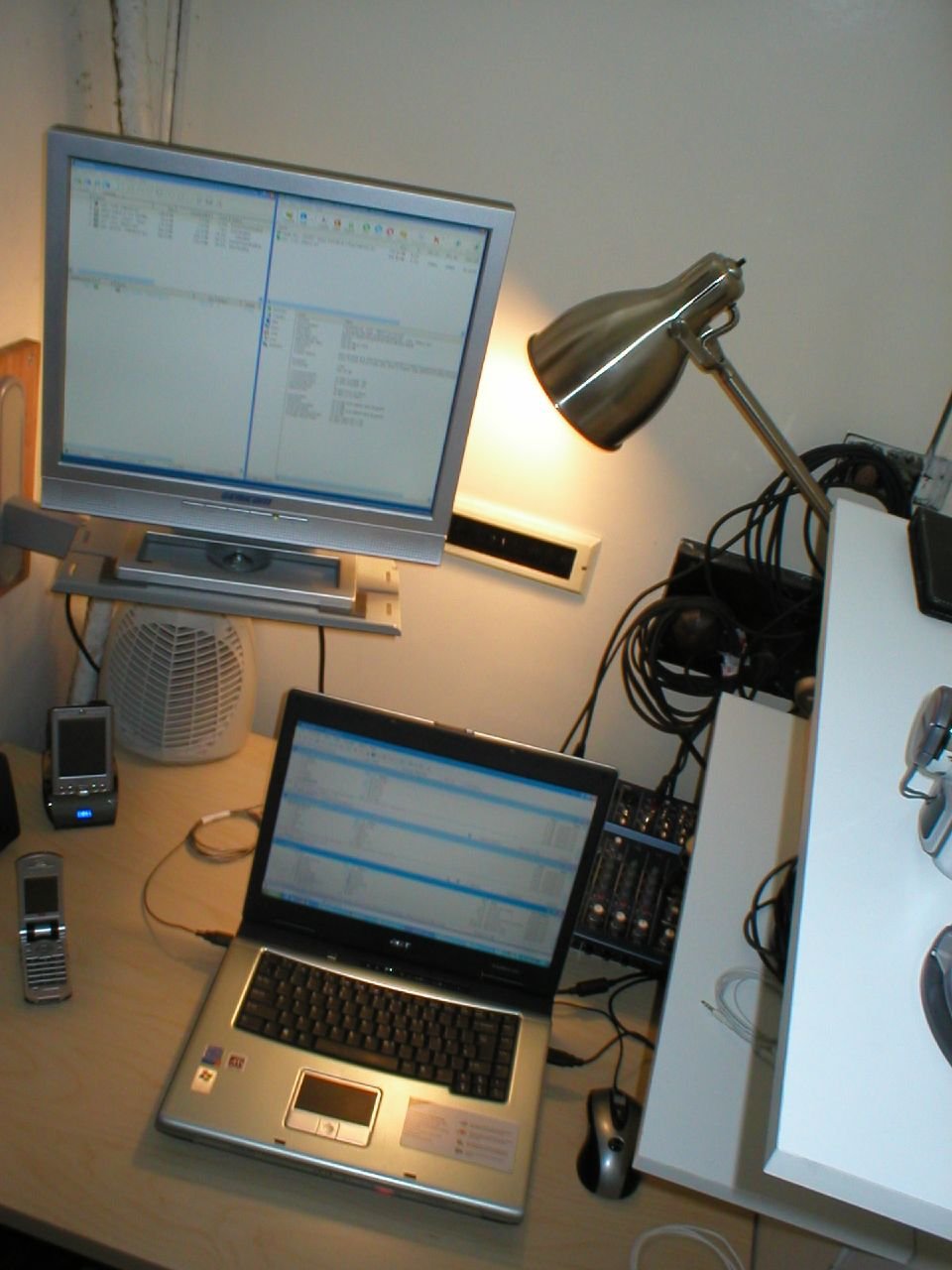
As podcast consumers, we’ve probably grown quite fussy and picky about what we’ll tolerate listening to. Anyway, here are some photos of my podcast set up “back in the day”.
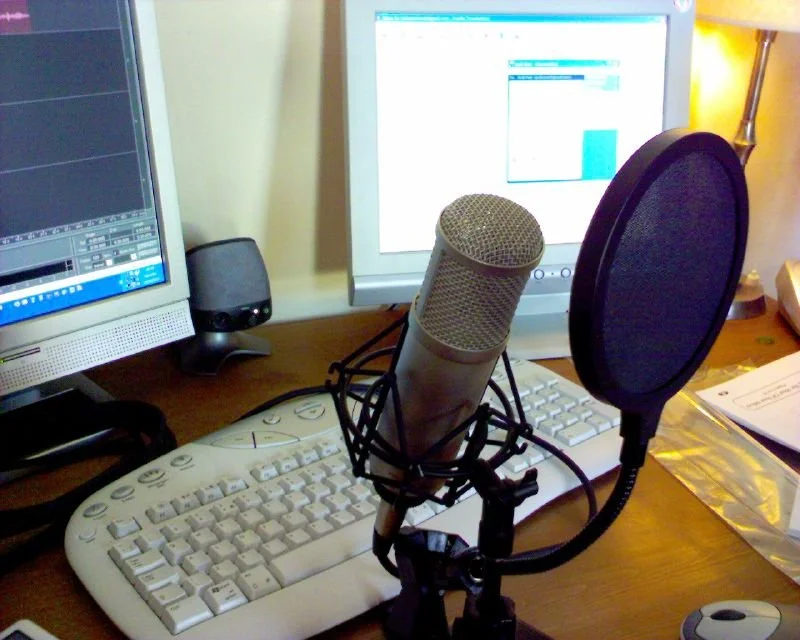
The photo above was taken around May 2005. Yeardley Smith had sent me £1,200 via PayPal, which I still find barely believable. I used part of it to buy a proper condenser mic and a Yamaha mixer, and set myself up in the vestibule of the house I was living in at the time. The production values were lo-fi. That was fairly standard then.
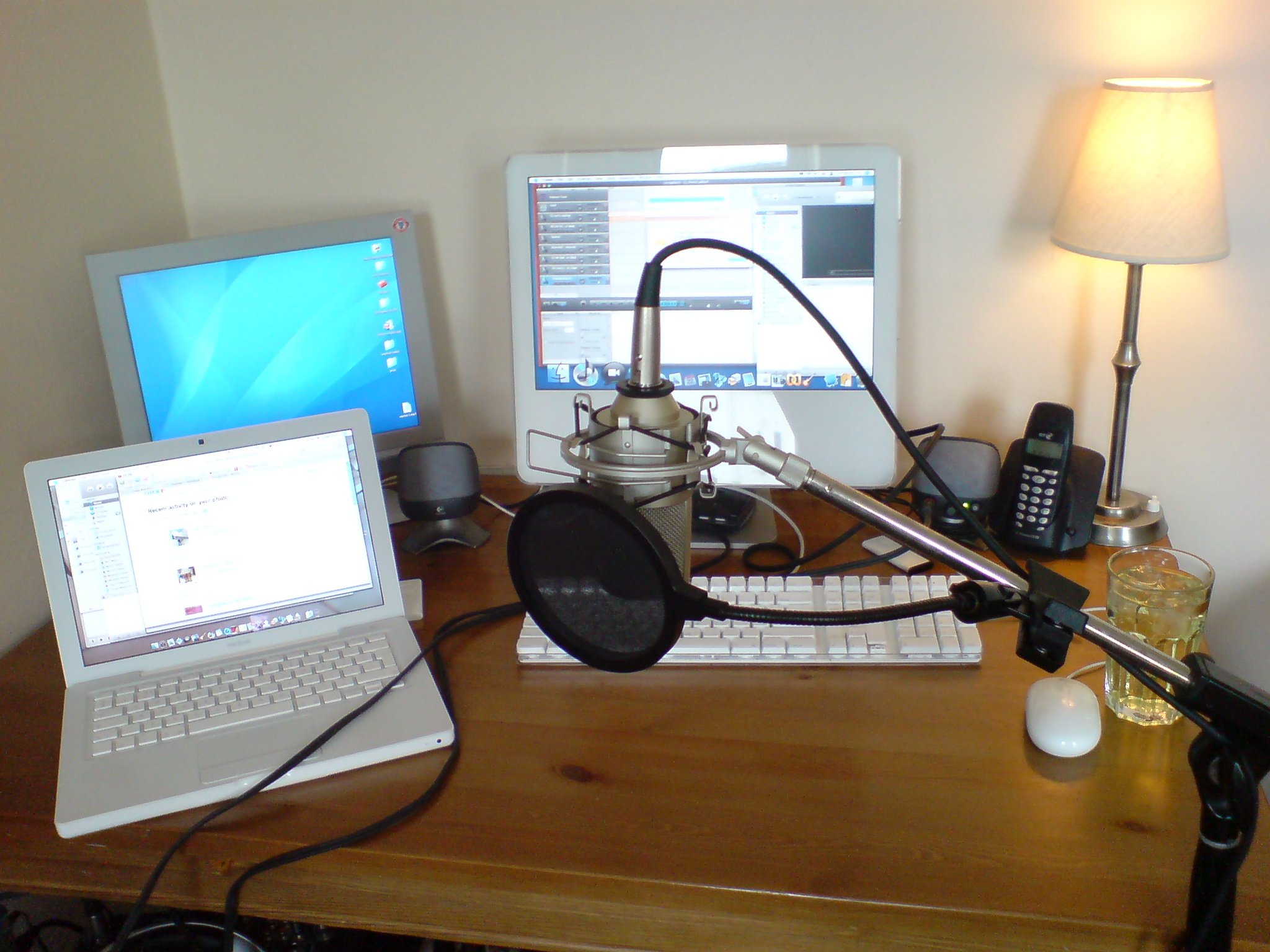
By late 2005, two organisations had approached me to produce podcast content for them as early adopters of the medium. I'd take days off from window cleaning and become what I'd hesitantly call a professional podcast producer. There probably weren't many of us in the UK with that title. PRI's The World, where Boyd hosted his tech segment, was one of the first US radio broadcasters to enter podcasting, launching its technology podcast in February 2005. The whole ecosystem was being built in real time. Wikipedia
By 2006, the wider community was starting to crystallise around live events. The Lance Anderson Podcast Experiment tour included appearances from Mark Hunter of The Tartan Podcast, alongside podcasters from across the UK, and a video link from Los Angeles. I was in the room. More than that, I'm in the Wikipedia entry for the history of podcasting, which still feels faintly surreal every time someone mentions it. Wikipedia
Also in that period, I was a columnist of what was then the world's first podcast magazine, Podcast User Magazine. The medium had become credible enough that someone thought it warranted a print publication, and I was the person pulling it together. Eventually, I took over as executive editor around 2008.
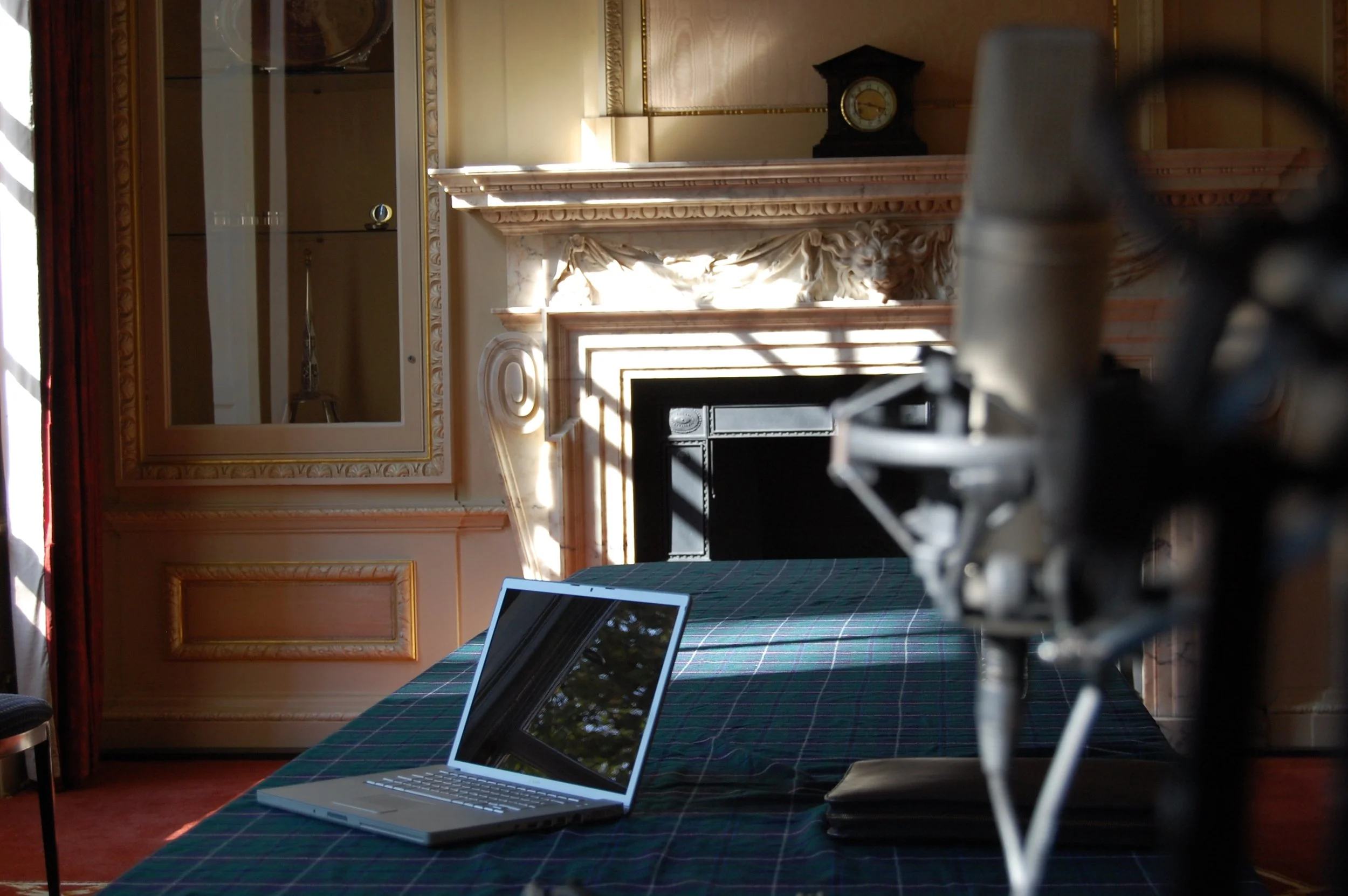
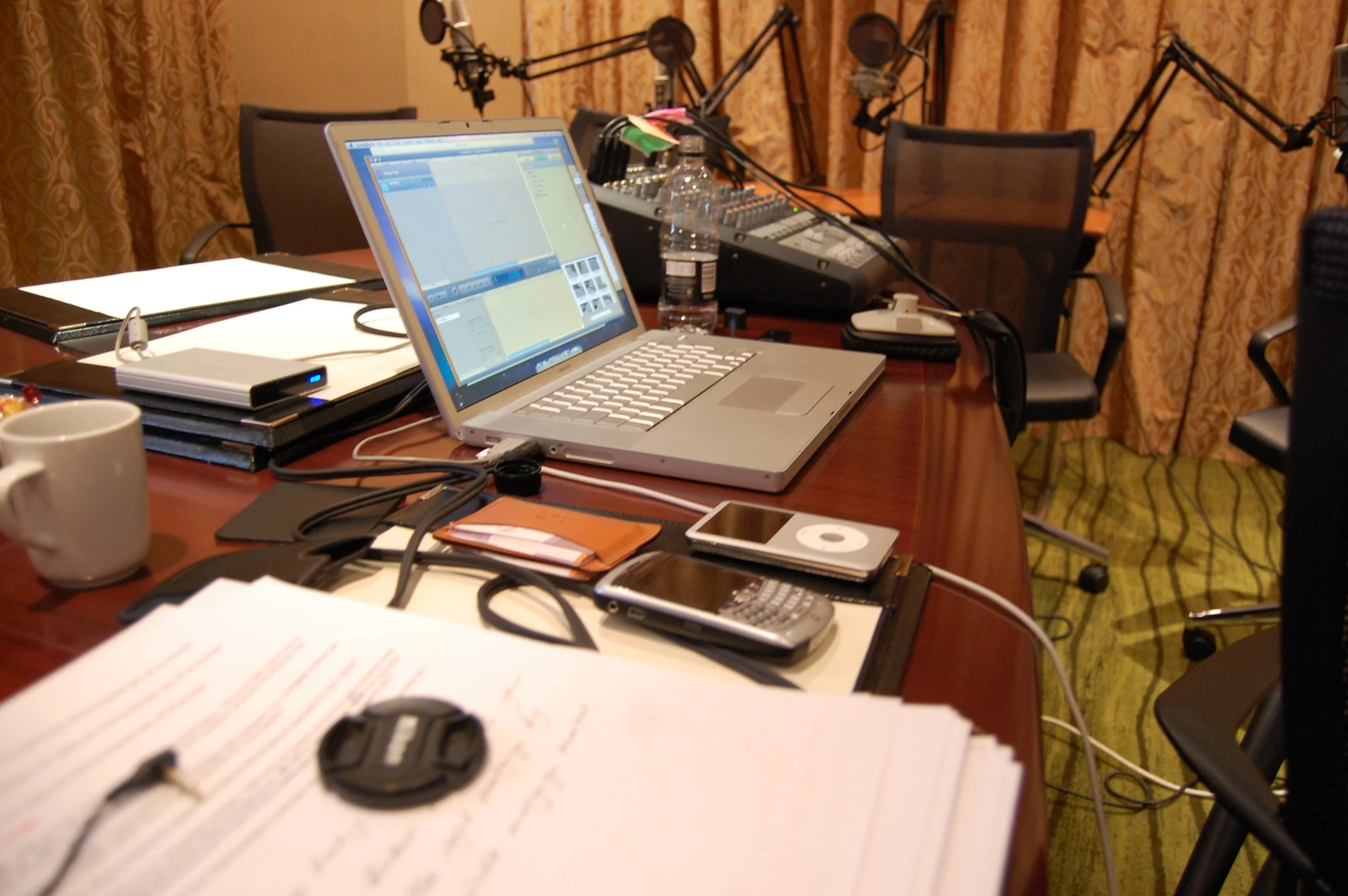
By 2008, I was travelling the length of the UK producing podcasts for clients full-time. Gordon White and I, the boot of his car loaded with mics, pop shields and a mixer. The photo above was taken in the Caledonian Club in London before a recording session for a building society. The one below it was in a conference room in Leicester, where I had a queue of people coming in throughout the day to record episodes. This was a normal Tuesday.
By 2009, I was running my own digital marketing business. I pitched a podcast to my first client, an e-commerce firm in Uddingston, and we made well over 100 episodes together. We live-streamed the hundredth. In 2010. Lightyears ahead of its time for that kind of content.
Then life happened. I moved into digital consultancy, flew to Islay to run workshops, drove to Wick and back, and worked with Scottish destination businesses on their content. The podcast itch went dormant for a few years.
It came back in 2019. I had a chat with a guy called Andy Currie, recorded it, realised it could have been a podcast episode, and within a couple of weeks, we launched the Social Experiment Podcast. Cameron, who'd appeared on the tartanpodcast as a five-year-old film critic, came on board as producer. We recorded in the back room of a mate's barbershop. The first episode had video. In 2019.
One thing led to another. By the summer of 2021, a podcast I was making with my mate Neil gave me back something I hadn't realised I'd lost. It did wonders for my mental health. And it planted the seed: what if we built a proper space for this?
So here we are. The Podcast Studio Glasgow. Multi-camera, broadcast standard, Abercromby Street.
James Cridland, who literally wrote the official history of UK podcasting, has Mark Hunter's name on his timeline. That's not a boast. It's context. When Callum from Pop Culture Patter walked into the studio to record his show, he was recording in a room built by someone who was doing this when podcasting didn't have a business model, a playbook, or a particularly convincing answer to the question "but what is it, actually?" Podnews
Twenty years of getting it wrong, getting it right, and getting it done. That's what's in the walls of this place.