
Apple Just Made Video Podcasting Non-Negotiable
Something happened this week that every podcaster needs to pay attention to. Apple announced that Apple Podcasts is getting a full video experience this spring, which will change the conversation about video podcasting permanently.
This isn’t a small tweak. Apple is bringing proper video playback to its podcast app using HLS (HTTP Live Streaming), the same technology that powers high-quality video streaming across the internet.
That means picture-in-picture mode, offline video downloads, playback speeds up to 3x, automatic quality adjustment depending on your connection, and seamless switching between watching and listening within the same feed. Beta testing started on 16 February 2026 across iOS 26.4, iPadOS 26.4, and visionOS 26.4, with full rollout coming in spring. As Eddy Cue, Apple’s senior vice president of Services, put it in the announcement: “Twenty years ago, Apple helped take podcasting mainstream by adding podcasts to iTunes… Today marks a defining milestone in that journey.”
He’s not wrong. To understand why this matters, you need to know Apple's role in podcasting from the very beginning.
Apple and Podcasting: A Twenty-Year Relationship
The word “podcast” itself is a portmanteau of “iPod” and “broadcast.” That’s not branding. That’s history. When podcasting emerged in 2004 and 2005, it was Apple’s hardware that people carried in their pockets and Apple’s software that brought the medium to a mass audience.
In June 2005, Apple added a dedicated podcast directory to iTunes, which was at version 4.9 at the time. Overnight, podcasters who had been distributing their shows through obscure RSS feeds and personal websites suddenly had a shop window with millions of potential listeners. Download numbers for early shows multiplied almost immediately. Apple didn’t create podcasting, but they mainstreamed it in a way no one else had.
From a personal perspective, I remember this as absolutely pivotal in the journey of independent podcast producers. And yes, the iTune’s podcast tab was full of “mainstream”, repurposed broadcast radio content (think BBC and NPR) at launch, what it meant for us grassroots, indie podcasters was legitimacy; rather than the RSS technology behind podcasting being hard to explain and implement to and for listeners, suddenly Apple had put podcasts right at the heart of software for the most popular mp3 player in the world.
For the next decade, Apple Podcasts was effectively the default podcast app for most listeners worldwide. When Apple released the standalone Podcasts app in 2012, separating it from iTunes, it cemented the medium’s status as something distinct and serious. The app came pre-installed on every iPhone, which meant that for hundreds of millions of people worldwide, Apple Podcasts was simply where podcasts lived.
Apple also shaped the technical standards the industry ran on. RSS feeds, episode artwork specifications, chapter markers, transcripts, and the show notes format you see in every app today were all developed with Apple’s platform as the primary reference point. The company didn’t charge hosting providers or creators for distribution, keeping the ecosystem open and allowing independent podcasters to compete on equal terms with broadcasters and media companies.
That same philosophy applies to the new video rollout. Apple will not charge hosting providers or creators to distribute video via HLS, keeping access costs low for independent producers.
Why This Announcement Signals a Shift That’s Already Happened
Apple isn’t leading a trend here. They’re catching up to one, which is arguably more significant. YouTube reported 1 billion monthly podcast viewers as of February 2025. Spotify’s video podcast consumption surged 90% in the year following the launch of its Partner Programme in January 2025, with over 530,000 video shows on the platform. Netflix has been striking deals with podcast creators to pull their video streams away from YouTube.
Video podcasting isn’t the future of the medium. It’s the present. And now Apple, the company that built the infrastructure the entire industry runs on, has formally recognised that.
For podcast creators who’ve been on the fence about video, this is the moment the argument ends. When the platform that put podcasting on the map invests in its own video-delivery technology, you can no longer treat video as an optional extra. It’s a distribution channel that reaches listeners across Apple devices in over 170 countries.
Ignoring it isn’t a creative decision. It’s leaving the reach on the table.
Is Your Podcast Hosting Platform Supported for Apple’s HLS Video Streaming at Launch?
| Hosting Platform | Apple HLS Video | Best For | Pricing (from) | Dynamic Ad Insertion | Analytics |
|---|---|---|---|---|---|
| ✅ Supported at Launch — Apple Podcasts HLS Video Ready | |||||
| Acast | Ready at Launch | Growth-focused creators & ad monetisation | Free tier available; paid from ~£7/mo | Yes | Advanced — listener demographics & targeting |
| ART19 (Amazon) | Ready at Launch | Large networks & enterprise publishers | Custom pricing | Yes | Advanced — audience segmentation & campaign data |
| Omny Studio (Triton) | Ready at Launch | Radio/broadcast organisations & enterprise teams | Custom pricing | Yes | Advanced — large-scale network management |
| Simplecast (SiriusXM) | Ready at Launch | Independent & professional podcasters | From ~£12/mo | Yes — via AdsWizz marketplace | Strong — episode & listener-level data |
| ⏳ Not Supported at Launch — Apple HLS Video Pending | |||||
| Buzzsprout | Not Yet Supported | Beginners & small independent shows | From £12/mo (3hrs/month upload) | Basic (audio only) | Good — IAB-certified, beginner-friendly |
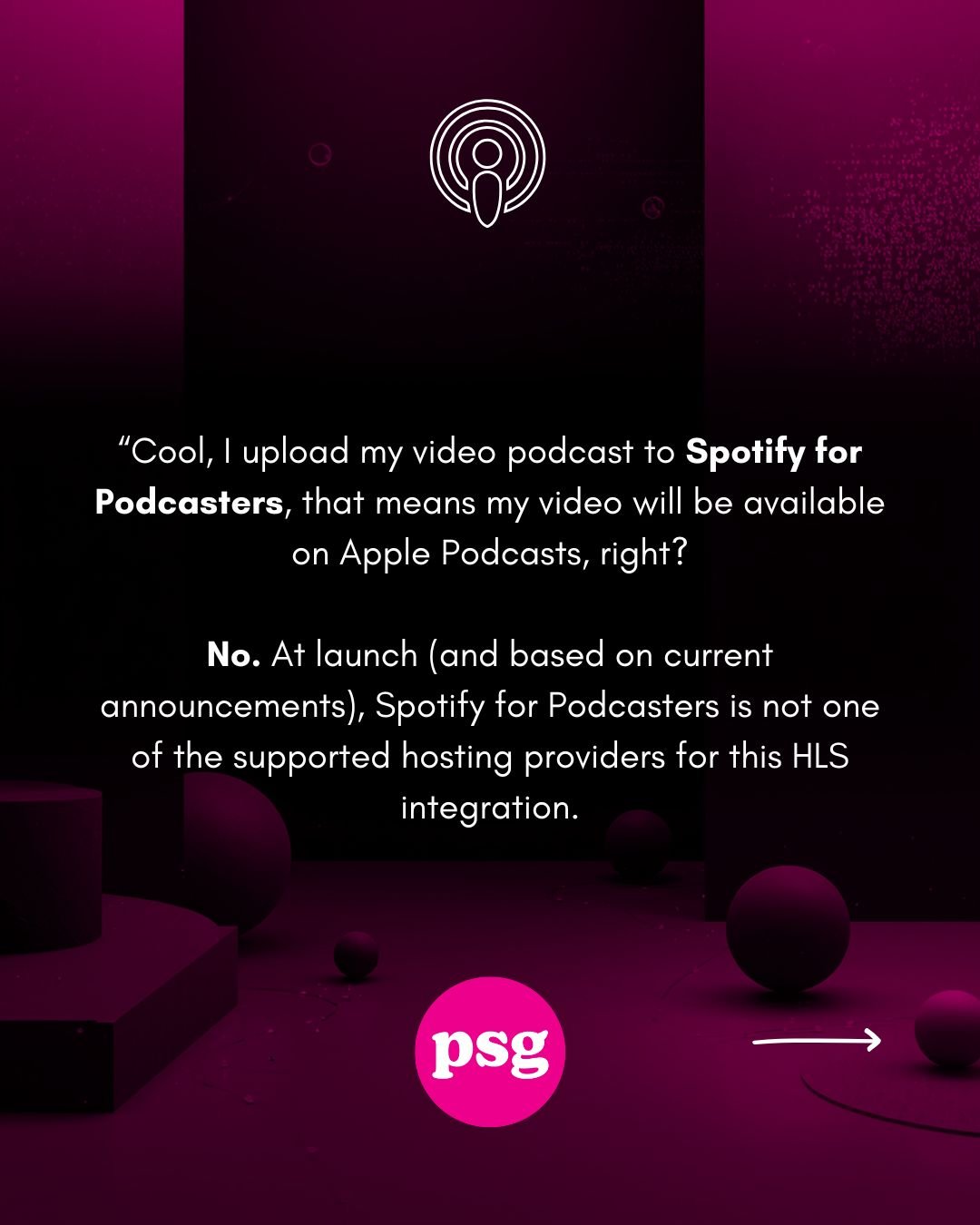
| Spotify for Creators | Not Yet Supported | Spotify-native creators; beginners | Free | Yes — Spotify only | Moderate — Spotify-ecosystem focused |
| Transistor | Not Yet Supported | Multi-show operators, teams, private podcasts | From ~£15/mo (unlimited shows) | No | Good — per-show & subscriber breakdowns |
| Podbean | Not Yet Supported | Video podcasters, live-streaming hosts | Free tier; paid from ~£7/mo | Yes | Good — includes listener location & behaviour |
| Libsyn | Not Yet Supported | Established & professional podcasters | From ~£4/mo | Yes | Strong — one of the most established in the industry |
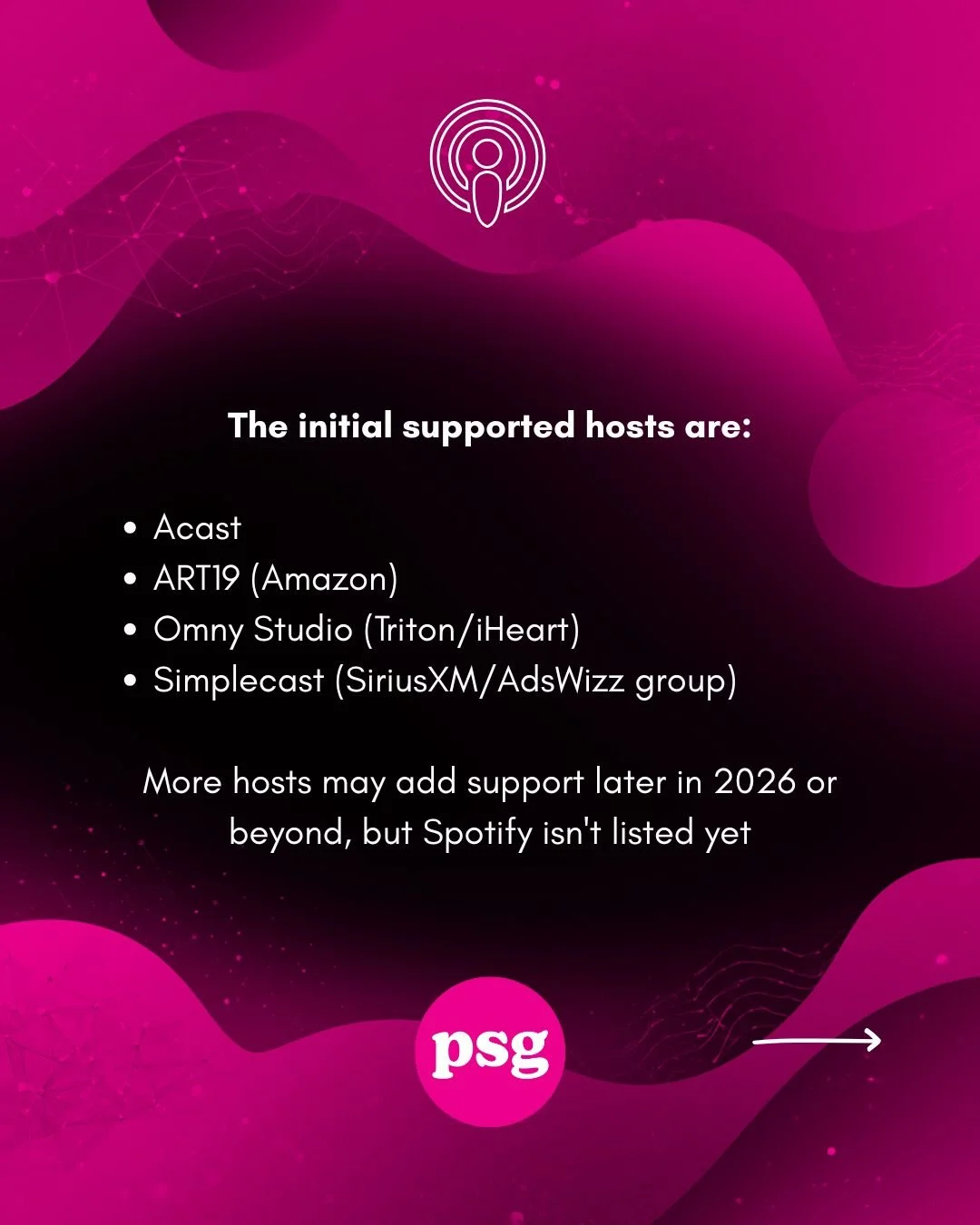
Apple confirmed Acast, ART19, Omny Studio, and Simplecast as HLS video launch partners as of February 2026. Additional hosting providers are expected to join. Pricing converted from USD and approximate. Sources: Apple Newsroom, Podnews.
There's a small irony worth flagging. Transistor, one of the most respected independent hosting platforms around, sponsored the very video that broke this story on Podnews, yet finds itself outside the launch group. As Podnews noted in their coverage, Transistor's sponsorship message even acknowledged the awkwardness directly. It's not a slight on Transistor as a platform; they remain an excellent choice for multi-show operators and teams. But it does illustrate something important about how Apple has approached this rollout. For the first time in its podcasting history, Apple has built a feature that requires you to be a customer of one of four specific companies to access it. That's a meaningful departure from the open RSS ecosystem that built podcasting into what it is today.
Libsyn is another name worth watching (I personally love Libsyn, I was its first non-North American customer back in 2005 and they upgraded my hosting package as a result).
They've supported video podcast distribution to Apple via RSS for years, so the omission from the HLS launch partners list isn't a reflection of their video credentials. It's simply that HLS is a new technical integration, and Apple has started with a small group of partners, all of whom double as major ad networks. That pattern tells you something about where Apple's priorities sit with this rollout: it's as much about monetisation infrastructure as it is about the viewer experience. More hosting providers will follow. But for now, if video on Apple Podcasts matters to your show, your hosting choice matters too.
What It Actually Means for Podcast Creators
The HLS approach Apple is using solves a problem that frustrated creators for years. Previously, audio and video versions of the same show often required separate RSS feeds, which led to fragmented analytics, split subscriber counts, and twice the admin work. Under the new system, video episodes integrate directly into your existing feed.
Listeners who prefer audio get audio.
Those who want to watch can watch.
Same show, same feed, no duplication.
Dynamic video ad insertion is supported, meaning creators keep monetisation control and can insert host-read spots or pre-produced ads directly into the video stream, just as they already do with audio. Hosting providers supporting HLS video at launch include Acast, ART19, Omny Studio, and Simplecast, so please keep this in mind.
There is a caveat worth noting. Podnews’s analysis of the announcement notes that because Apple is using HLS rather than RSS-based video, self-hosted shows and those on smaller hosting platforms won’t have access to video features at launch. This marks a departure from Apple’s historically open approach, and it’s something the industry will debate. For creators on the major hosting platforms, though, the path is clear.
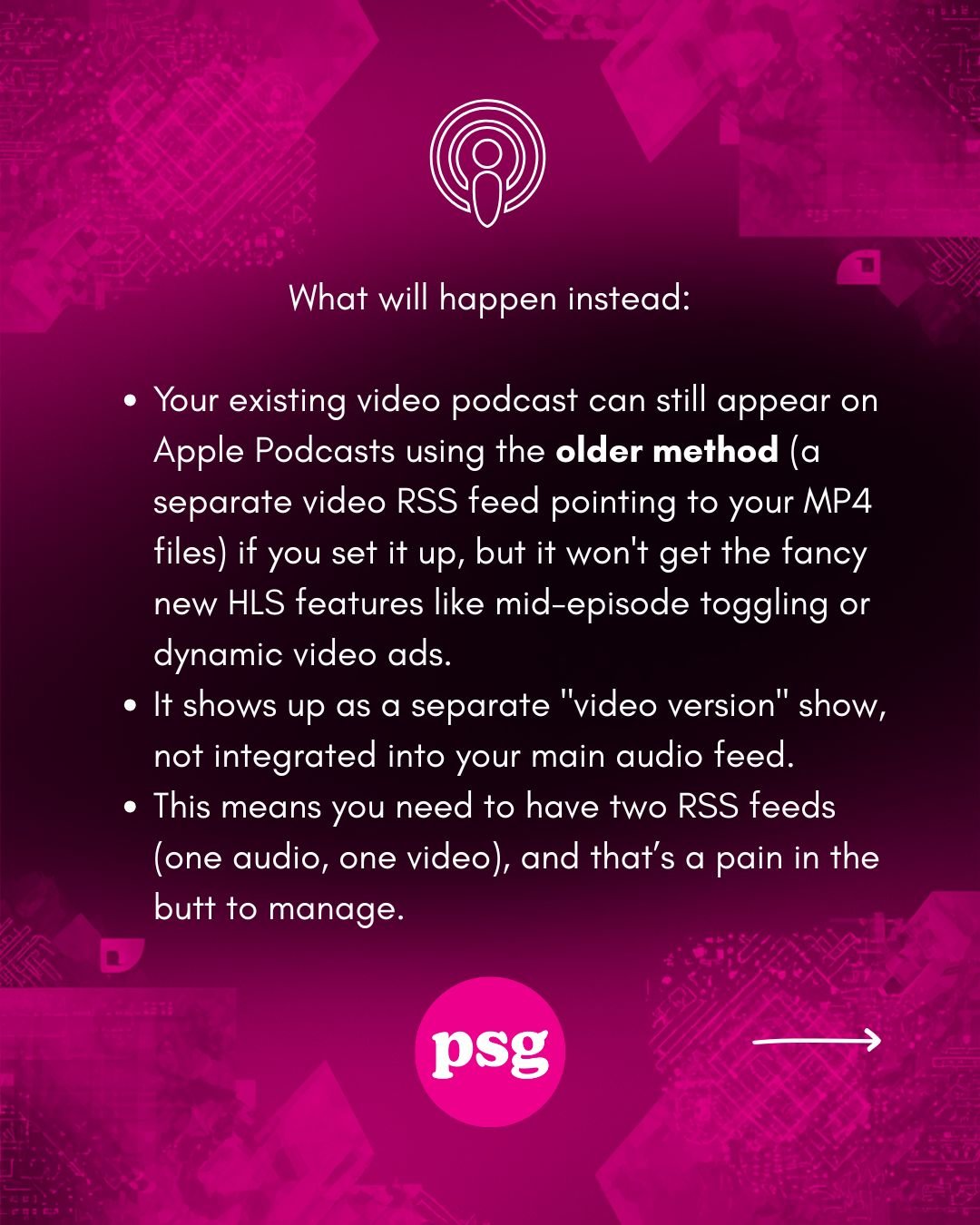
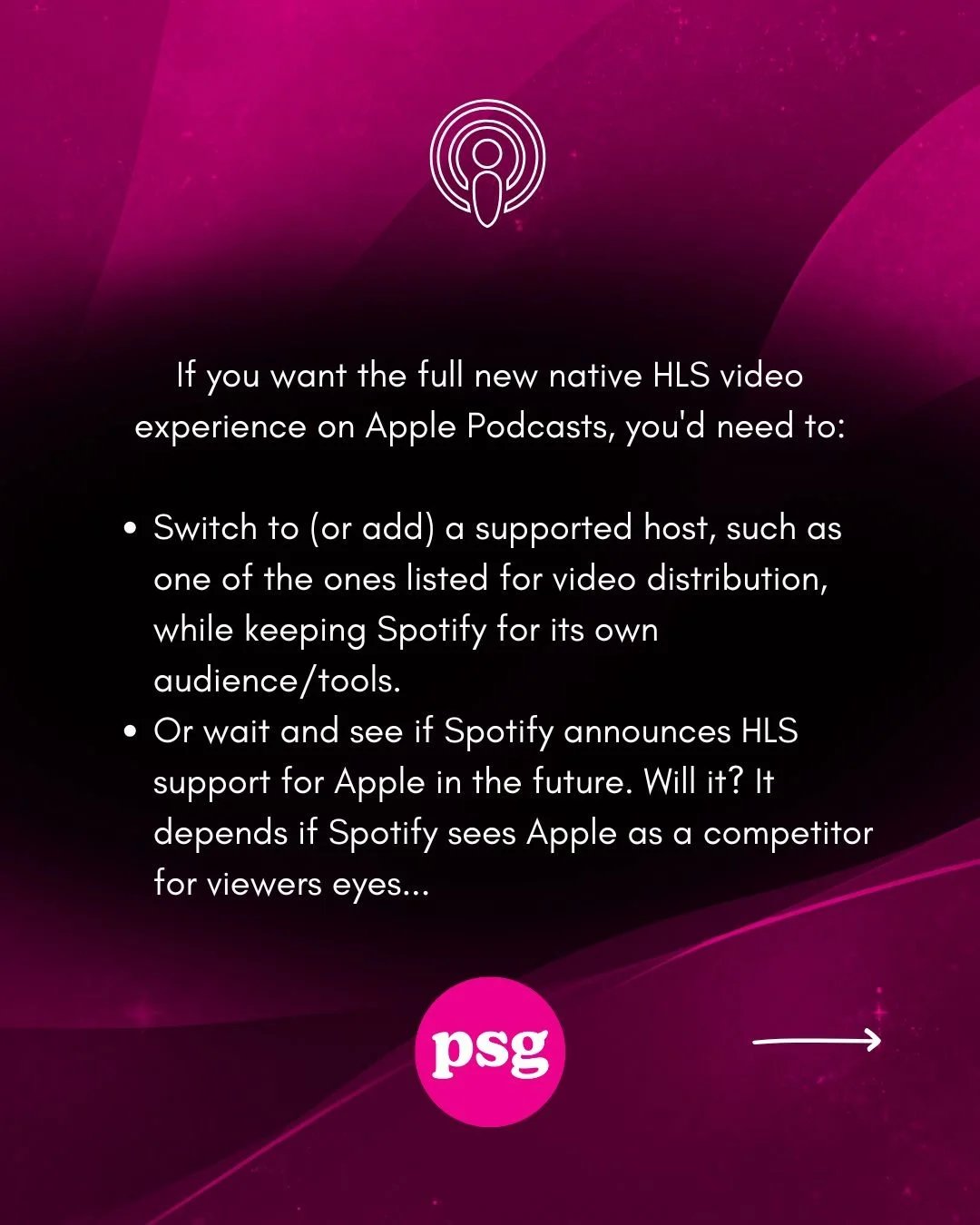
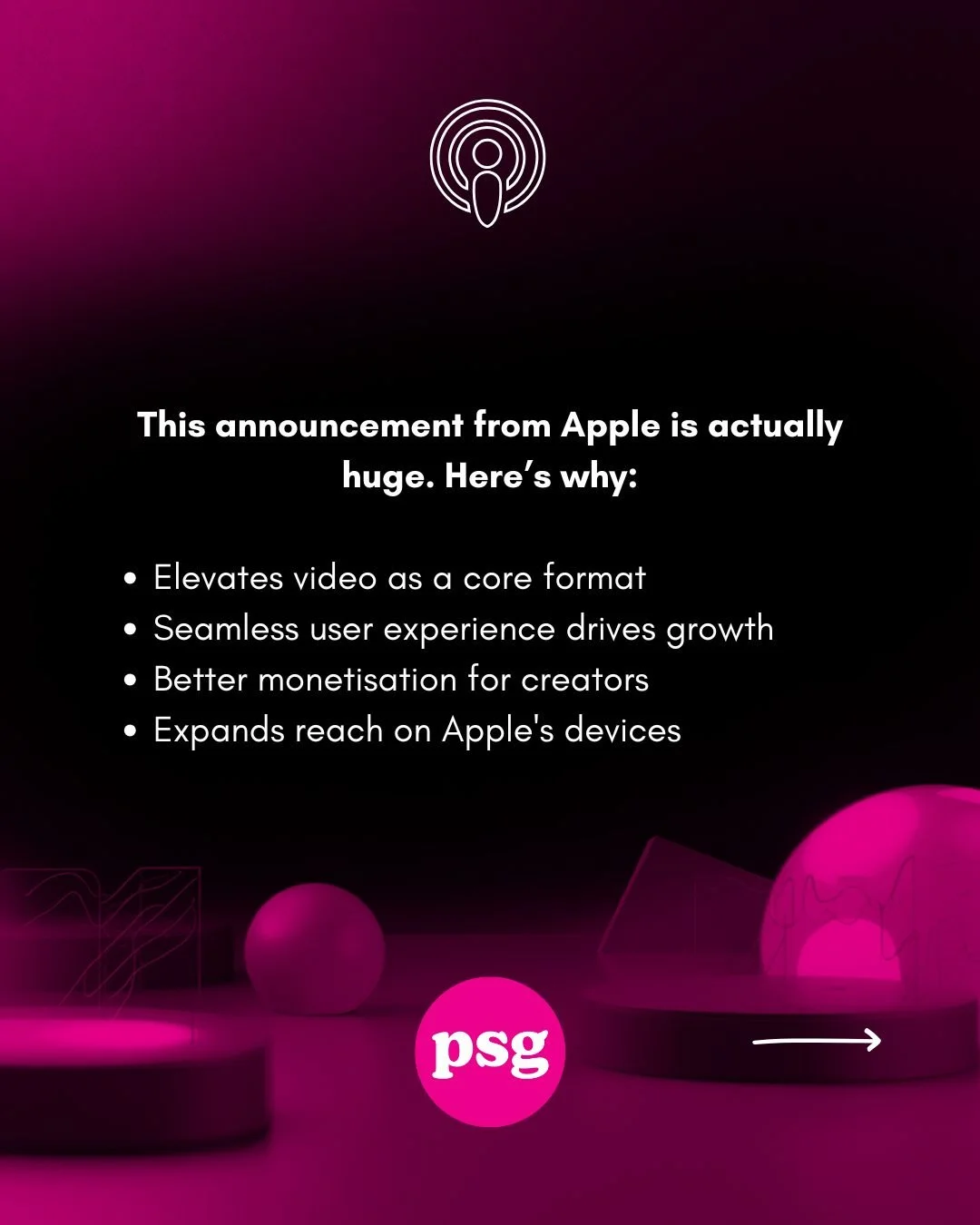
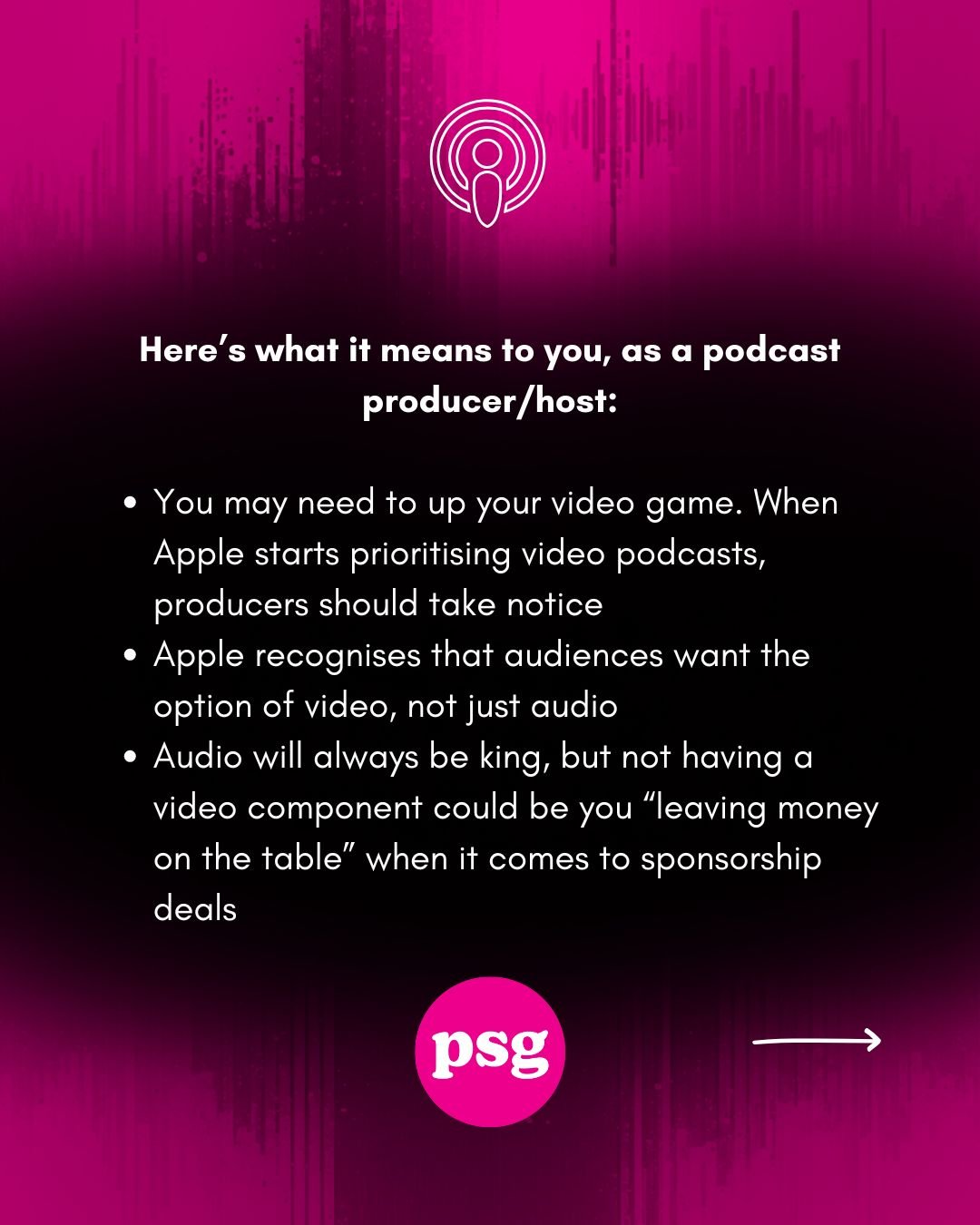
What if You Already Use Spotify for Podcasters to Upload Your Video Podcast Content? Will Apple Podcasts Automatically Play Your Video? Check Out the Images from our instagram Below

Video Podcasting Is Now a Professional Standard
Glasgow’s podcast scene, like the rest of the UK’s, has been moving toward video for a while. The studios investing in multi-camera setups, professional lighting, and broadcast-quality production aren’t ahead of the curve. They’re simply ready for what the industry has been building toward.
Apple’s announcement doesn’t create demand for video podcasting. It validates it. And when the company with twenty years of history shaping this medium moves in a direction, the rest of the industry follows.
But currently, there’s a big caveat: your podcast hosting platform needs to support video upload.
Sources: Apple Newsroom, Podnews detailed analysis, Winbuzzer