
Forget Viral, Think Tribal
I said it without thinking. I was being interviewed on someone else's podcast, and the host asked me how many downloads you need before a podcast is worth doing. And somewhere in my answer, it just came out: forget viral, think tribal.
The host paused. I paused. We both knew something had landed.
I've been podcasting since 2005. Twenty years. I was there when the charts on Podcast Alley were the only metric anyone cared about. I broke into the top ten one week and I remember the feeling clearly. I also remember that it changed absolutely nothing meaningful about my business.
The numbers problem
That's the thing nobody tells you when you start. The numbers feel like the point. They're not.
Here's a thought experiment I use with people who are on the verge of giving up because their download figures look small. Imagine you rent the room above a pub, put some flyers out, post about it online, and stand up to talk about your area of expertise for 45 minutes. How many people realistically turn up?
For most business owners, the honest answer is somewhere between embarrassing and zero.
Now picture this instead. You record a podcast episode and 25 people download it. Twenty-five. Sounds small, right? But picture those 25 people sitting in a room. They chose to be there. They pressed play. They listened to you for 45 minutes while commuting, at the gym, doing the dishes. They gave you their attention voluntarily for nearly an hour.
That's not a small thing. That's a remarkable thing.
Viral vs tribal
A viral video with 100,000 views sounds impressive. But those people watched for a few seconds, scrolled on, and forgot it existed before the end of the day. One hundred podcast listeners who come back every fortnight, who know your name, who trust your judgment because you've earned it over months of consistent, useful content — that audience is worth more to most businesses than any viral moment you could manufacture.
That's what I mean by tribal. Not an audience. A clan. People who belong to something, who share a common interest, who feel a genuine connection to what you're making and why you're making it. In Scotland, we have a word for that kind of loyalty. It holds.
I've written all of this up in a free guide called Forget Viral, Think Tribal. It covers the pub room test, what a tribe actually is and how to build one, why the niche is your foundation not your ceiling, how clips and short-form content fit into the picture without taking it over, and what success honestly looks like when you stop measuring yourself against shows with ten times your budget.
It's 24 pages. It's free. And if you've ever looked at your download numbers and thought about giving up, I'd like you to read it before you do.
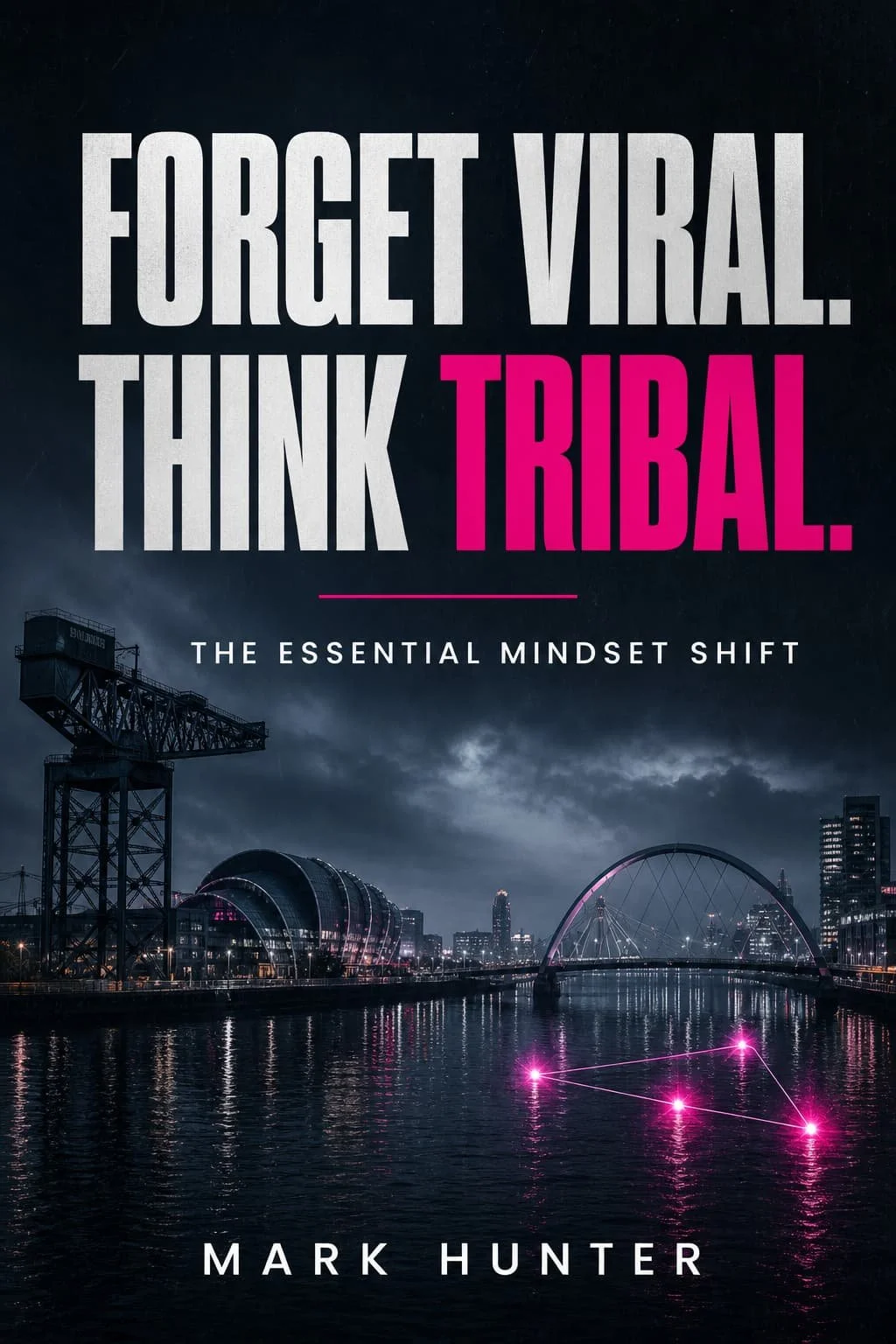
You don't need to go viral. You need to go tribal.
Most podcasters are measuring the wrong thing. They're watching download numbers, chasing algorithm approval, and giving up at episode six because the big audience never arrived. Mark Hunter has been podcasting since 2005 — long enough to have made every one of those mistakes, and long enough to know exactly why the viral mindset leads most business podcasters in completely the wrong direction.
We don't just write the playbooks—we run the infrastructure. Check out our full-service B2B podcast production arrangements to see how we partner with agencies and corporate teams.
Mark Hunter is Scotland's first podcaster and co-founder of Podcast Studio Glasgow at 279 Abercromby Street, Glasgow G40 2DD. He's been podcasting since 2005 and runs the studio with his son, Cameron.