
Do These 5 Things Before You Record Your Podcast
Hi, I’m Mark, co-founder of Podcast Studio Glasgow. With over 20 years’ experience in presenting, hosting and producing podcasts, I want to help you get the most from your recording sessions.
Here’s a concise, practical checklist for the night before your first recording, useful for both new and experienced hosts.
And as a bonus, I’ll also break down what makes a great interview question. Whether it’s your first episode or your hundredth, this checklist will ensure you’re confident and ready at the microphone.
There are five key checkpoints:
1. **Finalise Your Three Main Points**
Don’t script your episode—outline your three main points. This will keep your podcast focused and leave listeners satisfied.
Follow the “Rule of Three”: set-up, deep dive, and wrap-up. Write out your points the night before so you have clear direction when you record.
2. **Choose Your Opening Line**
Your first line sets the tone. Decide it in advance to sound confident and engaging from the outset.
And on a previous episode, I recommended recording your intro after you've actually recorded the full body of the podcast. I was on a Teams call yesterday with a new client, and, uh, they recognised that I.
If you’re interviewing a guest, start with a casual conversation before recording. In our studio, we handle the technical side—focus on making your guest comfortable.
We can just press record. The guest doesn't need to be aware that the recording has started. You know, we can give you a thumbs up in private. To let you know, the recording's going, and you can just start talking to them. Then it's in post-production, in the edit, where it's decided. Right. Okay.
This is the actual start point. Whichever point it may be in the conversation or the chat that you've started having with your guest. And then at the end, you can record your intro, and that's going to help you totally set the tone for the whole podcast by choosing a really strong opening sentence to get things rolling.
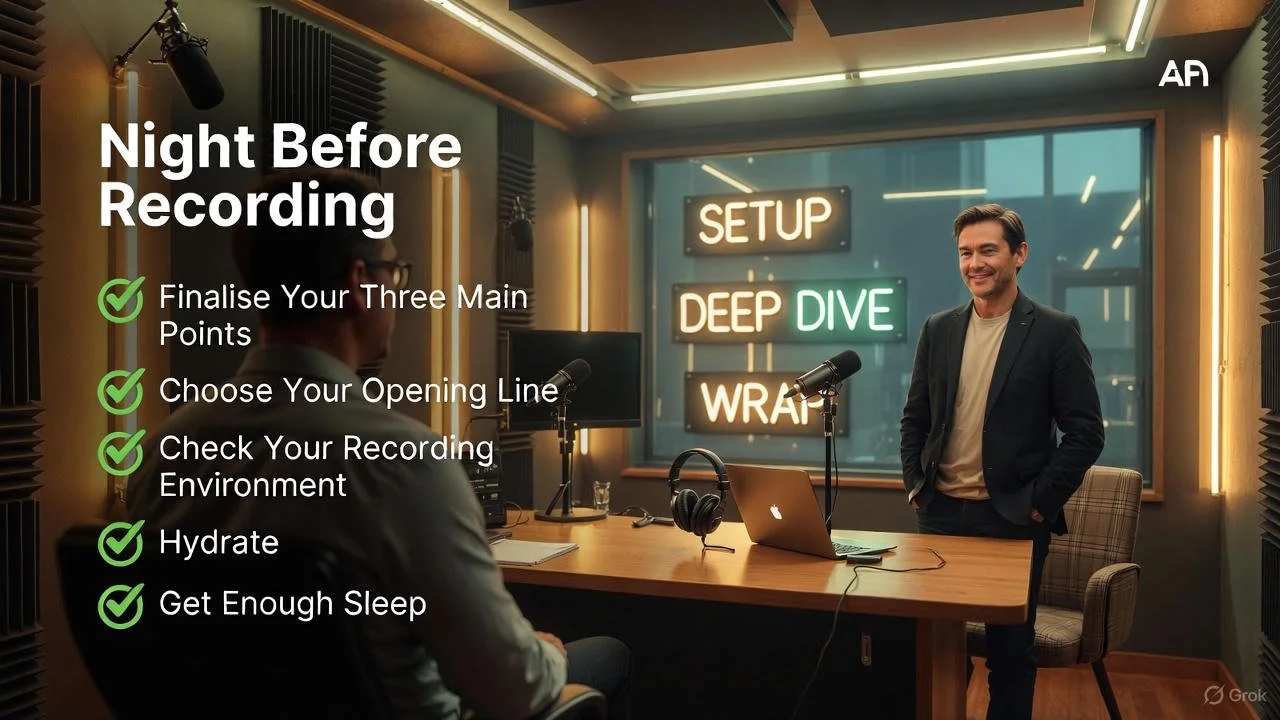
3. **Check Your Recording Environment**
If you’re not in our studio, ensure your recording space is quiet and free from echo. Use cushions or blankets to improve audio quality if needed.
4. **Hydrate**
Your voice sounds better when you’re well-hydrated. Drink water—avoid dairy and fizzy drinks before recording.
A dry mouth is hugely off-putting for listeners and hosts alike. Never record with a sweet in your mouth.
We once had a client record with a Polo mint in their mouth—the clacking was distracting. Dairy and fizzy drinks also affect your voice. Water is best.

no Polo mints. Ever
5. **Get Enough Sleep**
Fatigue is obvious in your voice. Rest well to sound confident and sharp.
Recap:
• Finalise your three main points
• Choose your opening line
• Check your recording environment
• Hydrate
• Get enough sleep
This checklist helps you stay calm, prepared and confident, all are key to a successful, engaging podcast.
how to ask the best interview questions
Now, let’s cover how to craft strong interview questions. Avoid closed (yes/no) questions—these limit conversation and stall momentum.
Ask open questions that prompt thoughtful answers. For example: “Your company grew quickly, but growth always has a cost. What was the moment you realised you needed to change your approach?”
Avoid vague prompts like “Tell me about yourself.” Use this simple formula: context, tension, invitation.

Keep the questions open, allow the tension to build
Context: Briefly explain the situation or background that led you to ask this question — what’s happening now and why it matters to the audience.
Tension: Highlight the central challenge, conflict, or uncertainty the guest is facing; make clear what’s at stake and why it creates friction or curiosity.
Invitation: Ask the guest to share their personal experience, perspective, or approach — invite them to step into the story and expand on how they’re navigating the tension.
Result: This structure builds anticipation for listeners by combining clear context, heightened tension, and a direct invitation that encourages candid storytelling.
After a strong question like, “What was the moment you realised you needed to change your approach?”, allow your guest a moment to think.
Don’t rush to fill brief silences—these pauses often lead to the best answers.
If you interrupt with a closed question, you lose depth. Embrace the silence; it usually only lasts a second or two but feels longer in the moment.
Great podcasts stand out because the host creates a space for genuine, natural conversation.
For more tips, or to work with us at Podcast Studio Glasgow, visit podcaststudioglasgow.com.